Mostrando las entradas con la etiqueta Bilingual Posts. Mostrar todas las entradas

13 oct 2010

Campesinos mayas agradecen las primeras cosechas de maíz


Mayan Peasants Give Thanks For The First Crops Of Maize

ENGLISH SUMMARY: This report by Mayan agronomist, journalist and cultural promoter Bernardo Caamal Itzá describes a Mayan ceremony that took place on October the 12th, 2010, to celebrate the vitality of Mayan cosmology and culture.
    Peasants from Peto and Tahdziú got together with j-meen (Mayan priest, or shaman) Fernando Caamal, from Chan Calotmul, to perform the ritual offering known as jo’oche’. This consists on the presentation of the first fruits of the milpa, or cornfield, to the supernatural beings known as yuum cháako’ob, the lords of rain.
    Bernardo reports that attendants showed a deep respect towards these deities and to maize, and that they took this event as an opportunity to share their tsikbal, that he translates as “thoughts, reflection”. He says that they were reminded of old prophesies; and they also evaluated their work in the cornfield, and talked about the origins of their culture.
    The j-meen Fernando Caamal explained that the jo’oche’ completes a series of ceremonies performed to thank the yuum cháako’ob for the favourable rains had during the year. The lords of rain are expected, on the other hand, to present these virgin fruits of the Mayan work (the new ears of corn) to Junab K’uj, the highest god.
    Shortly after the ceremony a forum called Bix aniko’on ti’ báaxo’ob k-jaantik (What is the situation of our crops) took place where participants had a chance to talk about their corn seeds and their life in the countryside. Participants in this forum said that, in the past 40 years, they have witnessed the loss of at least two types of corn seed: the wo’ naal and the xto’ol i’ij. The wo’ naal makes passing reference to the big toad wo’, a character that features in the rain petition ceremony, ch’a’a cháak.
     Confronted with an erratic rain season, the participants recommended that in order to prevent the loss of crops corn producers need to rely more on seeds of the quick-growing variety (xmejen naal) instead of the slow-growing variety (xnuuk naal). The rationale behind this is to be more able to cope with the unpredictability of the rain season. They pointed out, as well, that peasants should not expect to benefit from the rain that hurricanes bring to the region since these are thought to carry with them the salt of the oceans. The capacity of Mayan peasant knowledge to make sense of a constantly changing world was made clear by these reflections. Bernardo closes his report expressing that this millenary people have still got answers to confront climate change, and that these are rooted in their own strategy of development, which he calls kuxtal: “life, lifestyle; way of being in the world”.

Después de una ceremonia, es importante que los participantes se les haga, una limpia para evitar las malas energías

 CAMPESINOS MAYAS AGRADECEN LAS PRIMERAS COSECHAS DE MAIZ

* Con la ceremonia maya del Jo’oche’ todos le hicieron reverencia hacia el maíz.
* Los campesinos, al hacer recuento de sus semillas, señalan de que han perdido algunas de sus semillas de maíz y que están por perder otras, debido al cambio climático.
* Los jóvenes deben conocer su ancestral cultura para desarrollar sus capacidades locales, que implica el uso de sus recursos naturales y adecuar su tecnología.
* Los mayas recuerdan sus antiguas profecías y su relación con la situación actual.

Peto, Yucatán, México, 13 de octubre del 2010.

Con el objetivo de recuperar y fortalecer la cosmovisión de la cultura maya, campesinos del municipio de Peto y Tahdziú realizaron este martes 12 de octubre la ofrenda sagrada de las primeras cosechas de maíz, denominada Jo’oche’, ritual-ceremonial que fue presidido por el J-meen o sacerdote maya, Fernando Caamal, de la comunidad de Chan Calotmul.

    Durante toda la ceremonia ancestral, los participantes mostraron un profundo respeto hacia sus dioses y al maíz; así como aprovecharon para intercambiar su tsikba’al –sus reflexiones-, para recordar sus antiguas profecías, evaluar su actividad como milperos y el origen de su cultura.

    Amadeo Cool May, representante de los silvicultores de la Unidad de Manejo Forestal (UMAFOR) No. 3102 - en ella se encuentran integrados 12 municipios de la región sur del estado de Yucatán-, informó que este es el segundo año consecutivo en la que se realiza esta actividad con el propósito de compartir los valores de la cosmovisión maya que se conserva aún después de 500 años de invasión y neocolonialismo.

Sacerdote maya, hizo referencia sobre la importancia del antiguo conocimiento maya y la necesidad de que los jóvenes mayas lo conozcan
    Fernando Caamal, como guía espiritual maya en esta región, dio a conocer que esta ceremonia del jo’oche’ es el complemento de una serie de ceremonias que se realizan durante todo el calendario agrícola para agradecer el trabajo de los Yu’um cháako’ob o señores de la lluvia para que a su vez presenten a Junab K’uj – Máximo Dios –, el producto virgen de su trabajo – maíz nuevo –.

    Después de la ceremonia se implementó el foro Bi’ix aniko’on ti’ baxo’ob k-ja’antik (como nos encontramos en nuestros cultivos) entre los campesinos participantes quienes hablaron sobre la situación de sus semillas de maíz y de su vida en el campo.

    Recordaron que la contaminación ambiental en muchas ocasiones es producto de los químicos usados durante los conflictos o guerras entre las naciones. Al referirse al cambio del clima, destacaron que se empezó a manifestar desde hace más de 50 años con la llegada a la península de Yucatán de los huracanes Hilda y Janet (1955).

Campesinos mayas reflexionan sobre sus semillas
     También dijeron que en los últimos 40 años se han perdido por lo menos en la región, 2 importantes variedades de maíz criollo: el huo’ naal –que seguramente tiene mucha relación con el sapo huo’ que interviene durante el ch’a cháak – y el xto’ol i’ij –que resalta el tipo de olote delgado y los granos de maíz –, provocado por el paulatino abandono de la actividad milpera tradicional.

    Señalaron que una alternativa para evitar la pérdida de la producción y la obtención de los alimentos debido al clima, es imperante adecuarnos a los cambios como la siembra de variedades criollas de maíz de ciclo corto – xmejen naal – y aunque es de interés cultivar también los maíces de ciclo largo – xnuk naal –, eso dependerá de las observaciones que se tenga en la región, porque ahora ante el desorden que hay en el temporal lluvioso, es de interés aprovechar el temporal lluvioso aunque sean muy cortos, porque ahora si no llueve de forma excesiva, hace frio o se presenta la sequía, al final todos afectan a los maíces de ciclo largo.

    Los productores dijeron que en esta ocasión, los campesinos que realizaron sus siembras a principios de la temporada de lluvias ya lograron sus cosechas, pero aquellos que se atrasaron en sus siembras o que utilizaron semillas de ciclo largo están por perder su producción debido a que se adelantó el frío y se suspendieron la lluvias de forma repentina.

    Durante las reflexiones, señalaron que de acuerdo a la información dada por sus abuelos, es que de antes el temporal lluvioso no es producto de los ciclones tal como se presentan hoy en día, porque saben que los meteoros se llevan consigo siempre la sal, por tanto eso afectan la producción de sus cultivos que tienen en sus milpas.

    Casi al finalizar el evento, durante las conclusiones, los participantes señalaron la importancia de dar a conocer estas reflexiones a los jóvenes, y a quienes no conocen la cosmovisión maya, todo esto con la finalidad de entender la importancia de este pueblo milenario, conocedor de su entorno y de sus recursos naturales, y que hoy ante el cambio climático, aún tienen algunas respuestas para afrontarlo y todo esto forma parte de su estrategia de desarrollo – ku’uxtal –.

9 jun 2010

Una Mirada Crítica a las Universidades Indígenas e Interculturales


Llanes Ortiz, Genner de J. (2009). Mirada crítica sobre la participación, el conocimiento y el diálogo en las Universidades Indígenas e Interculturales. Revista Aquí Estamos, Año 6, no. 10, enero-junio de 2009 

Este artículo lo escribí hace cerca de un año y a través de él pude participar en conversaciones muy interesantes con otros compañeros y compañeras, profesionistas indígenas de Oaxaca, Chiapas y Veracruz en el marco de la publicación de la revista de divulgación "Aquí Estamos". La revista es un proyecto a través del cuál el Programa Internacional de Becas de Posgrado para Indígenas (coordinado en México por el CIESAS) promueve la divulgación del conocimiento adquirido y producido por aquellas personas que se han beneficiado al recibir la beca -como quien ésto escribe.A manera de introducción, incluyo aquí el párrafo que abre la reflexión acerca de las formas y los objetivos que han caracterizado la construcción de propuestas de educación superior para indígenas en nuestro país durante los últimos 10 años.
En este ensayo, comparto una serie de reflexiones acerca de los esfuerzos de construcción de propuestas de educación superior para los pueblos indígenas que en los últimos años se han articulado en América Latina, particularmente en México. A partir de la identificación de sus aportes, limitaciones y desafíos, intentaré formular una serie de reflexiones que contribuyan a la construcción de la interculturalidad. En este análisis me baso en conceptos e ideas reunidos a lo largo de mi experiencia profesional y académica; por una parte, como promotor de modelos educativos interculturales orientados hacia adultos indígenas, pero también como estudioso crítico de estos mismos modelos y de las propuestas educativas surgidas a partir de la acción de los movimientos indígenas y de la respuesta del Estado a sus demandas.
El artículo se puede descargar directamente desde aquí.

La revista incluye otros artículos igualmente interesantes de Miqueas Sánchez Gómez, María Elena Ballinas Méndez, Rafael Cardoso Jiménez, y Ascensión Sarmiento Santiago, así como una entrevista a Sylvie Didou.

La revista completa la pueden descargar aquí.
-------
ENGLISH QUICK NOTE: The previous post in Spanish introduces an article that I wrote nearly a year ago to participate in a collective publication of Indigenous scholars and professionals. This article was published in the magazine "Aquí Estamos" (Here We Are), which is part of a larger project promoted in Mexico by the Ford Foundation's International Fellowship Program, and that is coordinated by CIESAS. My contribution addresses what I consider to be very important questions with regard to participation, knowledge and dialogue within the so-called Indigenous and Intercultural Universities. Other similarly interesting articles in this magazine's issue are concerned with Indigenous education in Mexico. If you can read Spanish, and are interested in reading my article, you can download it from here.

4 abr 2009

Se equivoca el fuego / The fire blunders

It's quite probable that one of the reasons why Eduardo Galeano will be visiting Mani during his literary tour in Yucatan has to do with this wonderful piece he wrote years ago in his book “Memoria del Fuego” Los nacimientos (named Genesis in its English edition). When I come to think about how I first got in contact with Galeano's writing style, this immediately springs to mind as the first text that I ever read of him.


Mani has become a symbol for those involved in the defence and continuation of the legacy of the Maya people. This is where a vast amount of the literature, science and art of the Post-Classic Maya was destroyed and it remains as a scar in the historic memory of Yucatan.


These days Mani is however a place where one of the most interesting and innovative attempts at renewing and transforming the lives of the Maya is happening. This is precisely the Escuela de Agricultura Ecologica "U Yits Ka'an", where Galeano will be speaking to Maya and other Yucatecans about literature, politics and history.
Here I present you with the text, first in Spanish, and then in English.
----*----

1562
Maní
Se equivoca el fuego

Fray Diego de Landa arroja a las llamas, uno tras otro, los libros de los mayas.

El inquisidor maldice a Satanás y el fuego crepita y devora. Alrededor del quemadero, los herejes aúllan cabeza abajo. Colgados de los pies, desollados a latigazos, los indios reciben baños de cera hirviente mientras crecen las llamaradas y crujen los libros, como quejándose.

Esta noche se convierten en cenizas ocho siglos de literatura maya. En estos largos pliegos de papel de corteza, hablaban los signos y las imágenes: contaban los trabajos y los días, los sueños y las guerras de un pueblo nacido antes que Cristo. Con pinceles de cerdas de Jabalí, los sabedores de cosas habían pintado estos libros alumbrados, alumbradores, para que los nietos de los nietos no fueran ciegos y supieran verse y ver la historia de los suyos, para que conocieran el movimiento de las estrellas, la frecuencia de los eclipses y las profecías de los dioses, y para que pudieran llamar a las lluvias y a las buenas cosechas de maíz.

Al centro, el inquisidor quema los libros. En torno de la hoguera inmensa, castiga a los lectores. Mientras tanto, los autores, artistas-sacerdotes muertos hace años o hace siglos, beben chocolate a la fresca sombra del primer árbol del mundo. Ellos están en paz, porque han muerto sabiendo que la memoria no se incendia. ¿Acaso no se cantará y se danzará, por los tiempos de los tiempos, lo que ellos habían pintado?

Cuando le queman sus casitas de papel, la memoria encuentra refugio en las bocas que cantan las glorias de los hombres y los dioses, cantares que de gente en gente quedan, y en los cuerpos que danzan al son de los troncos huecos, los caparazones de tortuga y las flautas de caña.

The Fire Blunders

Fray Diego de Landa throws into the flames, one after the other, the books of the Mayas.

The inquisitor curses Satan, and the fire crackles and devours. Around the incinerator, heretics howl with their heads down. Hung by the feet, flayed with whips, Indians are doused with boiling wax as the fire flares up and the books snap, as if complaining.

Tonight, eight centuries of Mayan literature turn to ashes. On those long sheets of bark paper, signs and images spoke: They told of work done and days spent, of the dreams and the wars of a people before Christ. With hog-bristle brushes, the knowers of things had painted these illuminated, illuminating books so that the grandchildren’s grandchildren should not be blind, should know how to see themselves and see the history of their folk, so they should know the movements of the stars, the frequency of eclipses and prophecies of the gods and so they could call for rains and good corn harvests.

In the center, the inquisitor burns the books. Around the huge bonfire, he chastises the readers. Meanwhile, the authors, artist-priests dead years or centuries ago, drink chocolate in the fresh shade of the first tree of the world. They are at peace, because they died knowing that memory cannot be burned. Will not what they painted be sung and danced through the times of the times?

When its little paper houses are burned, memory finds refuge in mouths that sing the glories of men and of gods, songs that stay on from people to people and in bodies that dance to the sound of hollow trunks, tortoise shells, and reed flutes.
----*----

31 ene 2009

Maaya t'aano'ob (Mayan voices) in movement

While taking a break from dissertation writing I would like to comment and recommend this interesting work by a young filmaker from my hometown, Ticul. His name is Jaime Magaña Caamal and he is a member of the Turix Collective, a project of Yoochel Kaaj, a community video organization based in Merida.
In this work Jaime showcases the voices and thoughts of Oxkutzcab people with regard to international migration. It is estimated that more than 10,000 people from Oxkutzcab and its hinterland have migrated to the U.S., mainly to San Francisco and Oregon.
Some of these local voices talk of this migration as an inevitable future for their children and other young people in Oxkutzcab.
Since most of the local population make a living out of agriculture-related activities (either growing or selling local produce in the town marketplace, which is the largest agriculture centre of Yucatan outside Merida), they cannot help but being pessimistic about their economic future. Prices of agriculture and livestock products have steadily fallen since the 1990s. In spite of being Oxkutzcab the main trade centre for many rural localities of the three states of the Peninsula, it is precisely from this economically dynamic town that the majority of Maya-speaking migrants in the U.S. have originated.
The testimony of one market stallholder and citrus plot owner (2:33) is particularly telling. In Yucatec Maya, he presents his case: citrus prices are low and production costs high. That's why, he says, many people think: "It would better to go abroad if only to earn a little more" (2:58).
These voices speak too of how local professional people don't take the Maya-speaking peasants' problems seriously and how they offer them little help. That's how one Mestiza woman interprets her experience with a local doctor (3:12) who when her son got injured in the field told her with a blank face that he should take on a new job. She explains that this is the only activity that her son was qualified to do and that more support was needed, which she didn't get in the end.
An ex-migrant who worked in Oakland (3:59) comments how it was the desire of building his own house which encouraged him to migrate. Again, the Mestiza woman tells us that not all of those who go to the U.S. come back. Some of them die "on the other side". Some of those who go won't necessarily find prosperity as the man with the cowboy hat explains (4:55). And their debts would remain unpaid. The documentary finishes with a blessing and good wishes to all of those who decide to migrate in the quest for a better life.
Still pictures of Oxkutzcab, its market and its people highlight the sense of movement and dynamism of these Maaya t'aano'ob (Mayan voices).

11 sept 2006

Claiming back the past in pursuit of the future / Reivindicando el pasado en pos del futuro

Celebración del año maya 5120, organizada por los vecinos del sitio arqueológico Dzoyilá, reinvindicando la protección, rescate y difusión de esta antigua ciudad maya. Música, danza, ritual del fuego sagrado y juego de pelota purépecha normal y y encendida.
Commemoration of the Mayan New Year 5120. This event was organized by the neighbours of archaeological site Dzoyila. The neighbours' movement demands the protection, recovery and diffusion of the cultural inheritance of this ancient Mayan city with music, dances, rituals of the sacred fire and Purhepecha ball game.

1 sept 2006

De Vuelta en Brighton / Back in Brighton


Después de estar casi un mes y un poco más ya de vuelta en estas calcáreas tierras inglesas (las del sureste de la Old Blighty), me reporto a este espacio, donde ya hace varias lunas prometí mucho más dinamismo y acción.
No es sencillo cuando los pensamientos se van escurriendo de la mente hacia el éter sin encontrar asidero en esta realidad, la de las letras, las imágenes y las luces de la pantalla. Sin embargo, ahora que ya de regreso nos encontramos a la apacible vida académica de la Universidad de Sussex (con sus rutinarias escaramuzas de libros, reuniones y visitas al "pub") espero que semana con semana pueda ir enriqueciendo este espacio con noticias y una que otra intercultural, política y filosófica reflexión. Entre los pendientes que dejé en la temporada anterior está la continuación de mi reflexión sobre "Ser Aj Kaanbal Miatsil". En lo inmediato, compartiré en este espacio anécdotas de mi historia al otro lado del Gran Charco en distintas campañas y safaris en pos de la captura del cristal intercultural.
Espero encontrarlos pronto por esta su "bitácora" cibernética...


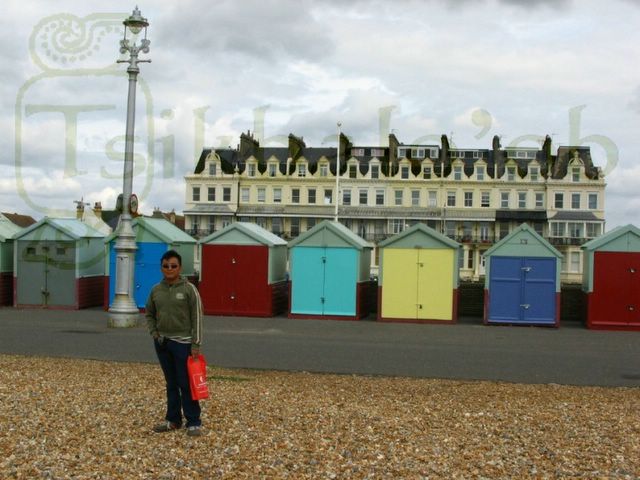
En la playa de Hove (Agosto de 2006) / At the beach in Hove (August 2006)

After a month and so of my coming back to this calcareous Englishs soil (the one in the South Eastern corner of Old Blighty, that is), it is time to report back to this space. It has been many moons since I promised to give this blog more dynamism and action. And yet, it is not easy when your thoughts slide out of your mind into the ether without being able to grip unto this reality, the one of letters, pictures and sparks from the screen. Now that we are back, however, to the placid academic life of Sussex University (wich consists in monotonous skirmishes involving books, get-togethers and visits to the pub) I hope I can continue enriching this space with news and some intercultural, political and philosophical thoughts on a regular basis. Among the business I left in pending for the last season, there is the following-up (and translation, maybe) of what I started under the title of "Ser Aj Kaanbal Miatsil". As for the immediate tasks ahead I'll be sharing in this blog different anecdotes of my history to the Other Side of the Great Puddle which saw undertaking manifold campaigns and safaris in the hunt of the intercultural crystal.
Hope to see you soon in this space for conversations...